The Wonder of Wool by Justine Lee and Jess Morency
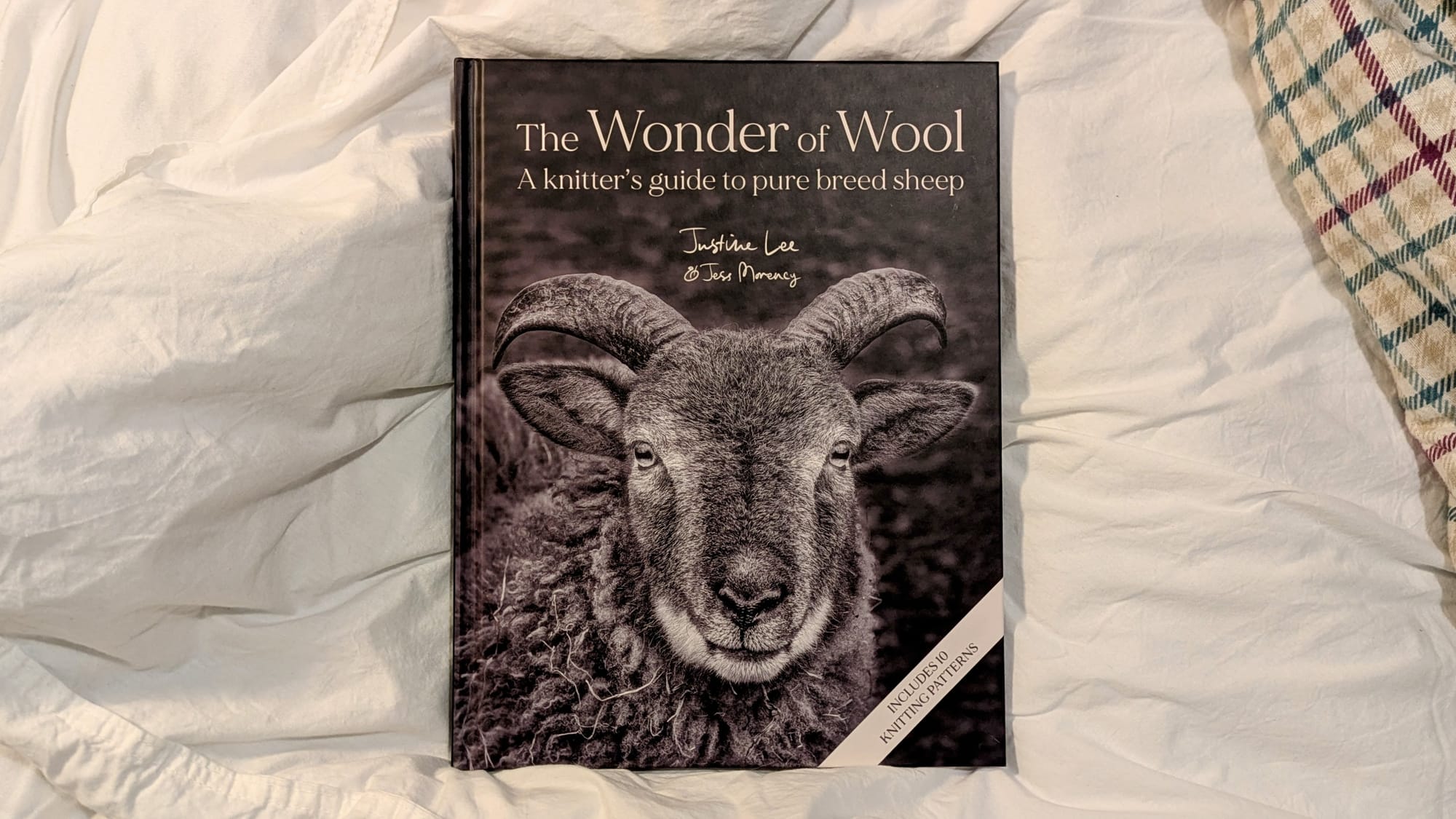
This was a brilliant Christmas present from my husband. It's partly a non-fiction exploration of the history of British sheep and wool, partly a directory of all the different breeds with notes on their suitability for knitting/spinning, and partly a book of knitting patterns that suit certain heritage wools.
I've been interested in rare breed wool for a few years, having made a few small things with the Ronaldsay wool produced in Orkney and been gifted some hanks of Manx Loaghtan wool from the Isle of Man that sadly perished in a moth attack before I could use them. Now, after reading what this book had to say about fast fashion vs locally-produced fibres and garments, I'm feeling fired up to expand my stash and my repertoire.
I also learned a lot about the history of wool production and sheep breeding from this book, which was instructive. As cotton grew in popularity and affordability in the 17th and 18th centuries, the demand for British wool (previously a highly sought after and traded commodity) completely collapsed. This was especially nice for me to read about because one of my favourite books as a child was The Wool-Pack by Cynthia Harnett, which is all about the wool trade in 15th century England and the arrival of Medici financiers in the wool and cloth business. The Wonder of Wool filled in some gaps for me.
Everything changed for British wool in about the 1700s. Sheep farmers began to prioritise the meat only, ignoring the quality of fleece, so many previously excellent wool-producing breeds became indifferent or useless. There is now a movement to improve this again, although it will take many ovine generations for the project to reach fruition, of course. Similarly, there is a growing effort to conserve individual rare breeds for their specific wool attributes, also a long game.
This book also caused me to reflect on the complications of moving to a more sustainable way of making clothing. I'm probably just about an intermediate knitter, I have a flexible job with no commute, and I don't have caring responsibilities. It still takes me weeks of dedicated knitting, fitted in around other work, to make a single garment. I looked at the knitwear store run by one of these authors to see how much a finished version of one of the patterns was, and a single jumper costs £575. I'm sure that is a fair price given the materials and labour involved, yet it's a price that is completely inaccessible to almost everyone, including me.
As I was reading this book, I was having daydreams of a completely handmade wardrobe, from little vests made out of the softest underwool to sturdy coats made from more rugged fibres. Fun to imagine, even if it isn't remotely practical or possible. I will, however, be checking the provenance of all the wool I buy in future and doing my best to source it from UK rare breed suppliers.
If you purchase this book from one of the following places, I receive a small commission that supports my writing. The price remains the same for you.
Bookshop.org (UK) | Bookshop.org (US) | Abebooks | Waterstones | Amazon | Kindle | Kobo
Member discussion